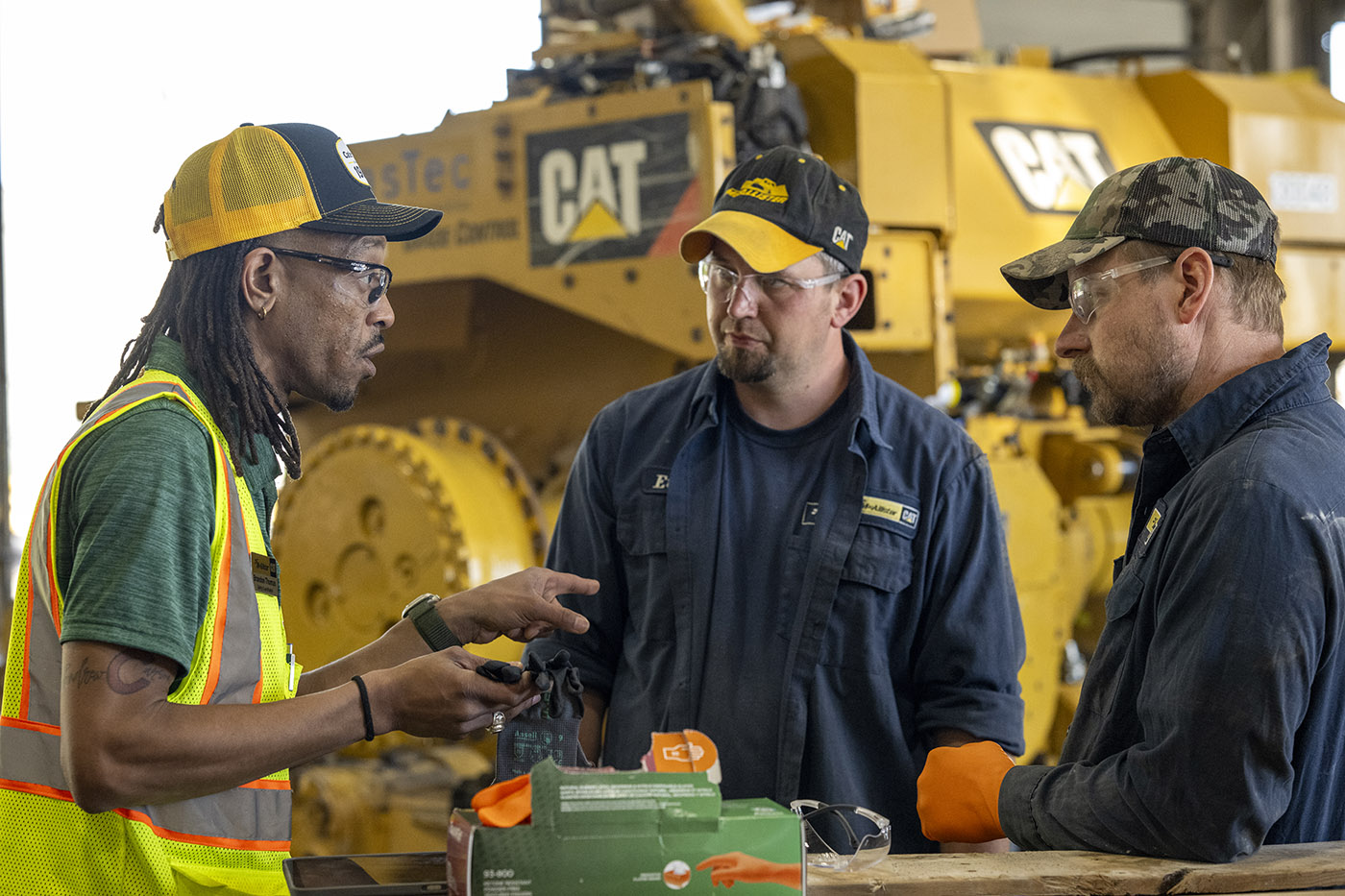
Sometimes you find a career. Other times, that career lands in your lap.
Or, as happened to Sycamore Brandon Thomas, who is pursuing his Bachelor of Science in Safety, Health, and Environment at Indiana State University, it knocks you in the back of the head.
“Safety moves at the speed of trust,” Brandon says. “That philosophy stems from a turning point in my life when I was injured on a job.”
Brandon, 40, an Indianapolis native who currently lives in Brownstown with wife Hannah and their children, was working for a tree-trimming company when one day, a branch his work partner was cutting fell in an unexpected direction and hit him in the head. He was wearing a hardhat, but the impact pushed his hat down over his glasses and knocked them to the ground, breaking them.
“They didn’t want to pay for my glasses,” Brandon explains. “They said I wasn’t standing where I was supposed to stand, that I wasn’t wearing the right kind of hardhat, that I didn’t have safety glasses on. I said, ‘Why are you just telling me this now? That information would have been important to know before something happened.’”
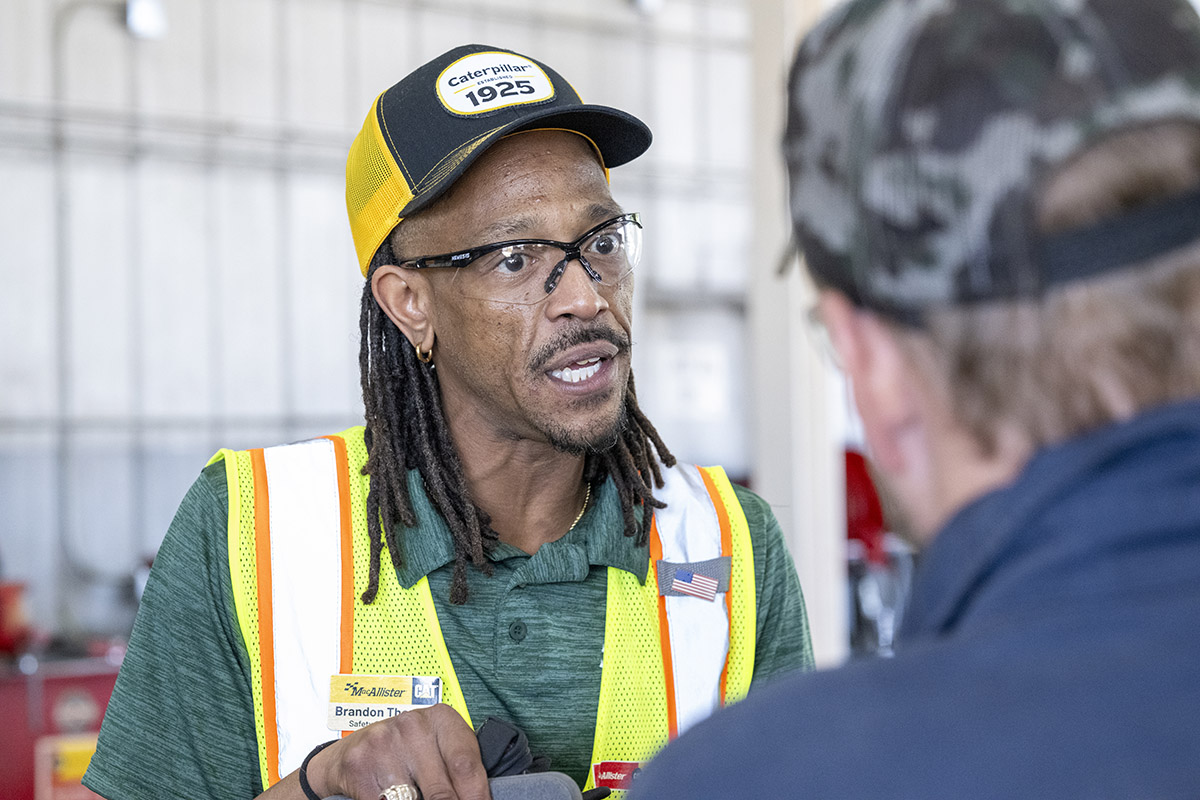
The relative lack of prior safety and health training inspired Brandon to educate himself, and his employers, about workplace health and safety. The more he looked into it, the more convinced he became that safety “needed a voice,” and the more passionate he became about being the one to speak up. Whenever Brandon would express to employers his interest in addressing workplace safety, their response was always, “Then do it.”
So, he did. Brandon would become the health and safety advocate wherever he worked, advising fellow employees and management about safety issues, OSHA regulations, the latest safety gear, and other important topics. Eventually, he realized that an errant tree branch had pushed him toward a career in workplace safety.
“Safety is there to protect and serve workers,” Brandon explains. “Safety is information. It’s knowledge. It’s explaining what the different terms mean. With the compliance piece of it, you may only see what not to do, but safety is also about showing people new ways to do things that may be safer.”
“The number one advantage to having a good safety protocol on a job site is ensuring everyone on that job site gets home exactly the way they showed up,” he adds.
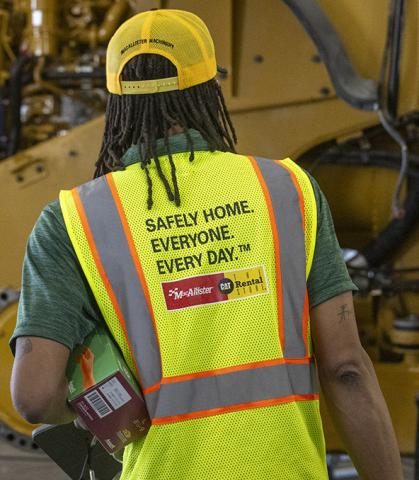
Brandon currently works as the safety coordinator for MacAllister Machinery, a major Indiana construction and heavy equipment dealer with locations across the state and in Michigan.
Though he’s been with the company for about two years – and previously worked for the Indiana Department of Transportation and Indiana OSHA – he knew that advancing his career as a workplace safety professional would require pairing his practical, on-the-ground knowledge with a four-year degree from an accredited Safety, Health, and Environment program.
“There are a lot of words and language that are necessary to know and understand to get certain standards across, and you're not going to learn that through your experience alone,” he explains. “You need to have the degree. You have to [learn from] the professionals who know the language and understand how to communicate to employees that you're responsible for their safety.”
Brandon chose Indiana State because its program’s reputation and accredited status stood out to him.
The University’s Bailey College of Engineering & Technology offered one of the first safety management bachelor's degrees in the country, and it remains one of a relatively few such programs accredited by the Applied and Natural Science Accreditation Commission (ANSAC) of the Accreditation Board for Engineering and Technology (ABET).
“The faculty and staff here in this program are absolutely phenomenal. They are experts in their field with industry experience, and they're willing to work with you and help you reach your goals,” Brandon says. “For me, that means having confidence and the knowledge to step into the workforce and build a career helping protect workers and preventing accidents while maintaining productivity on the site.”
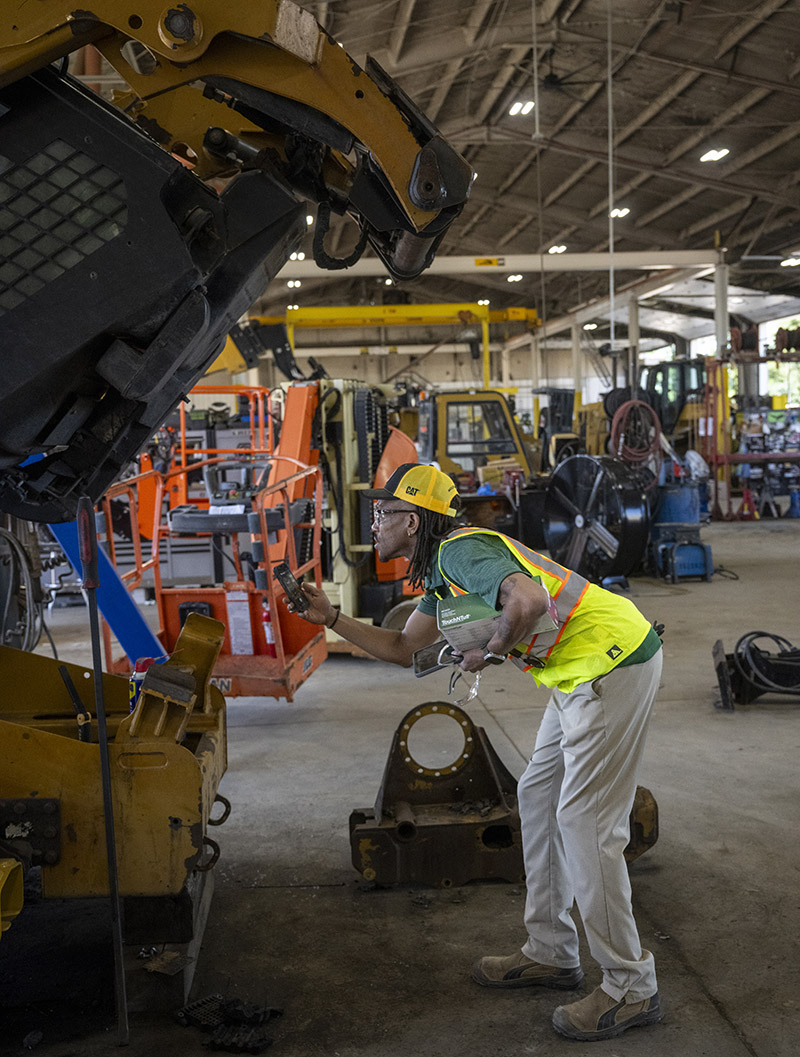
Brandon said faculty have been receptive to his ideas about providing activities for online students, such as livestreamed tours of work sites to illustrate current workplace safety practices.
The Safety, Health, and Environment program is offered both on campus and fully online, and many online classes are offered asynchronously. This means Brandon can fit his college schedule around his work and family responsibilities. And the online program still offers him hands-on learning opportunities through internships and lab activities that he can complete remotely.
“Being an online student poses its challenges,” Brandon says. “But the Safety, Health, and Environment program provides me with flexibility. I'm able to communicate any time with my professors ... via phone, via text, via Zoom. Some of the classes are asynchronous, meaning I can get the work done at my pace rather than a six-, eight-, or ten-week pace. The program also allows for autonomy and lots of freedom to be able to conceptualize the concepts that I'm learning in my daily life and work.”
Brandon was also able to complete an internship requirement with his current employer, earning necessary academic credits for the hands-on work he already performs in his job. And student membership in the American Society of Safety Professionals (ASSP) has been transformational for his education and future career, he says.
“That networking, and the ability to go to conferences and see others that are doing the same job, just in different industries with different hazards, that's priceless,” he says. “I'm able to communicate with others who've gone to this school, done this program, and are in the ASSP, and they're able to guide and mentor me on this process.”
Brandon says he knows firsthand the unflattering reputation workplace safety officials can have as the “safety police.” That is not how he sees the role, and it’s not how he wants employees or management to view him.
“I don’t want to be ‘Brandon the safety guy,’” he insists. “I like to say that safety is just what I play on TV. I just want to be known as Brandon, the friendly guy who comes around with new safety gloves, for example, and asks people if they’ve tried these yet.
“Indiana State has helped me develop the skills to build human-first safety programs that are based on educating, engaging, and empowering workers to own their workplace environment,” he continues. “My plan after graduation is to educate the whole world about workplace hazards and workplace safety.”